Understanding MOQ: What Wholesale Buyers Need to Know
Published 7 May 2026 · Updated 8 May 2026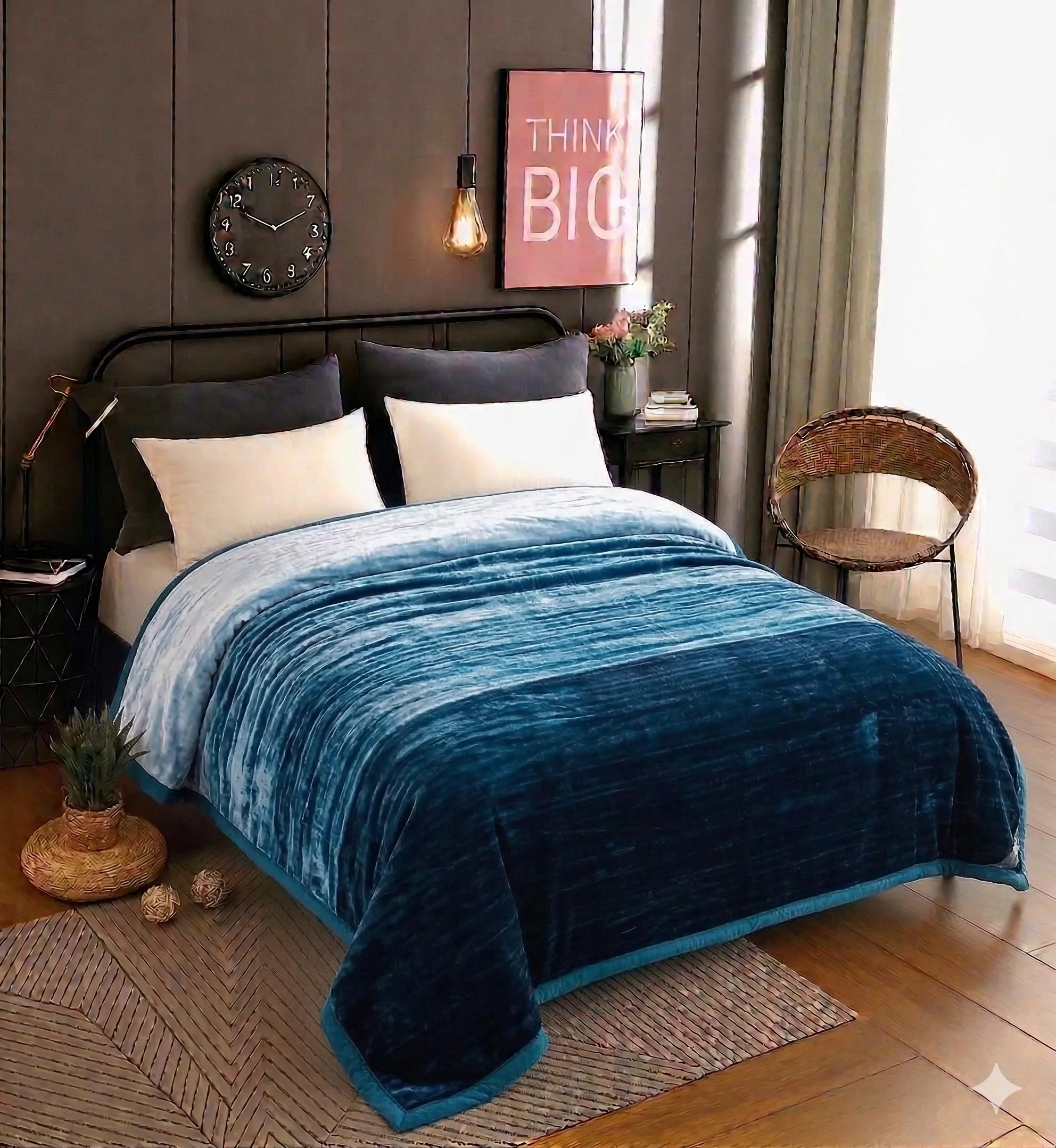
The minimum order quantity is almost always the first question a wholesale buyer asks. It is also one of the most misunderstood parts of the manufacturer-buyer conversation. Buyers often interpret MOQ as an arbitrary barrier, while manufacturers see it as a basic commercial reality. Understanding what MOQ actually represents — and where there is room to negotiate — leads to a far more productive buying conversation.
What MOQ Actually Means
MOQ is the smallest quantity a manufacturer will produce as a single order. The figure is usually quoted per design and per collection rather than as a total volume across the catalogue, which is the most common point of confusion. Buyers sometimes hear "MOQ 500" and assume it means 500 pieces total; the manufacturer often means 500 pieces per design.
The second area of confusion is the difference between a quoted MOQ and a practical MOQ. The quoted figure is the floor below which the manufacturer will not run a job. The practical MOQ — the quantity at which pricing becomes attractive — is often higher. Both numbers matter, and both should be confirmed in writing before commitments are made.
Why Manufacturers Set MOQs
Manufacturing economics drive every MOQ. A blanket production run involves machine setup time, fibre and yarn procurement against a defined batch, dye preparation that has to be done in fixed minimum volumes, and design plate or printing setup specific to that design. The total fixed cost of starting a production run is largely invariant whether the run produces 100 pieces or 1,000.
That means the per-piece cost of fixed overhead falls sharply as quantity rises. A run that is too small leaves the manufacturer either selling at a loss or charging a per-piece price the buyer will not accept. The MOQ is the point at which fixed costs are spread across enough units to allow the manufacturer to quote a workable wholesale price. It is not arbitrary, and it cannot be discounted to zero without breaking the cost model.
How MOQs Vary by Collection Type
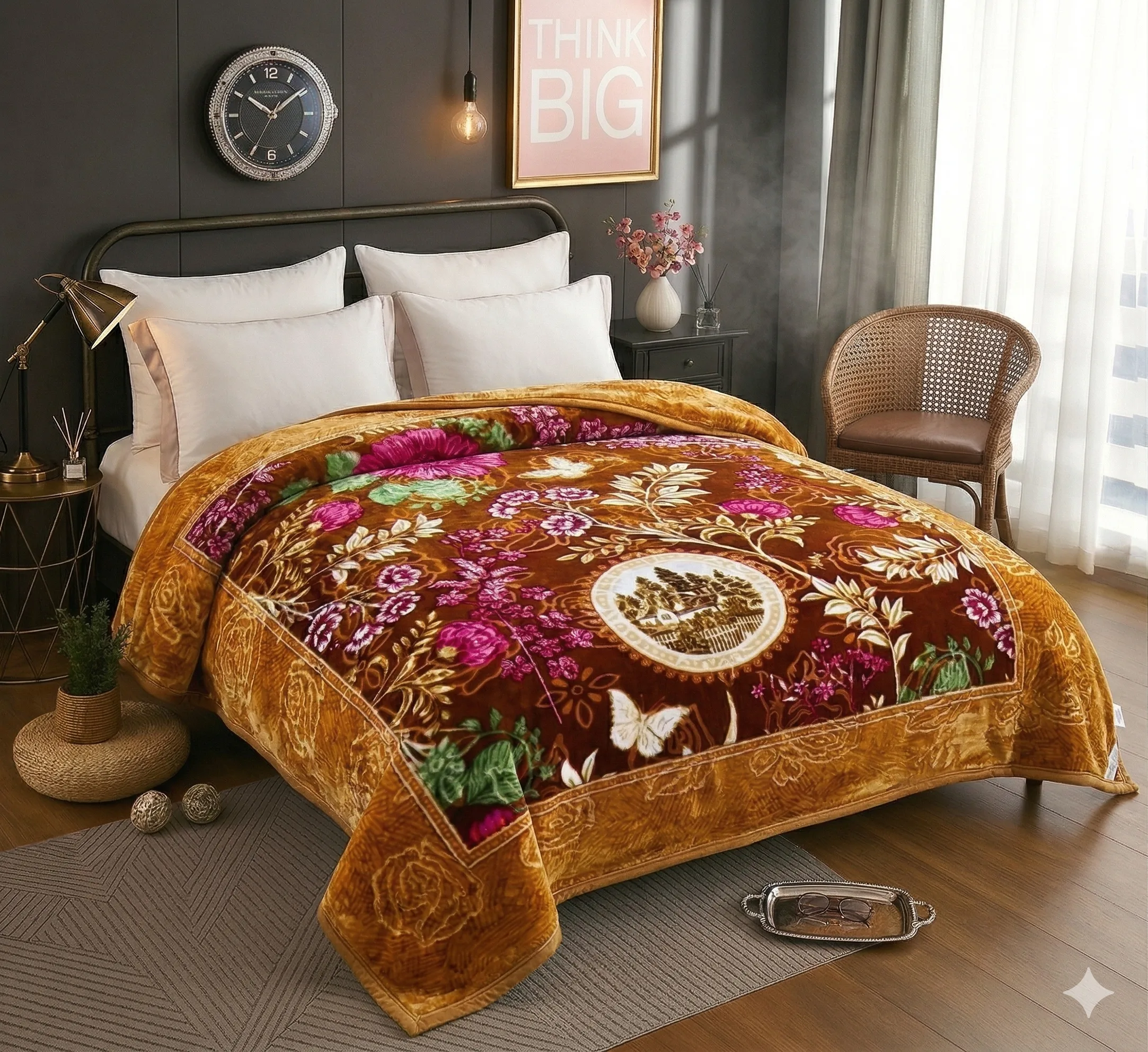
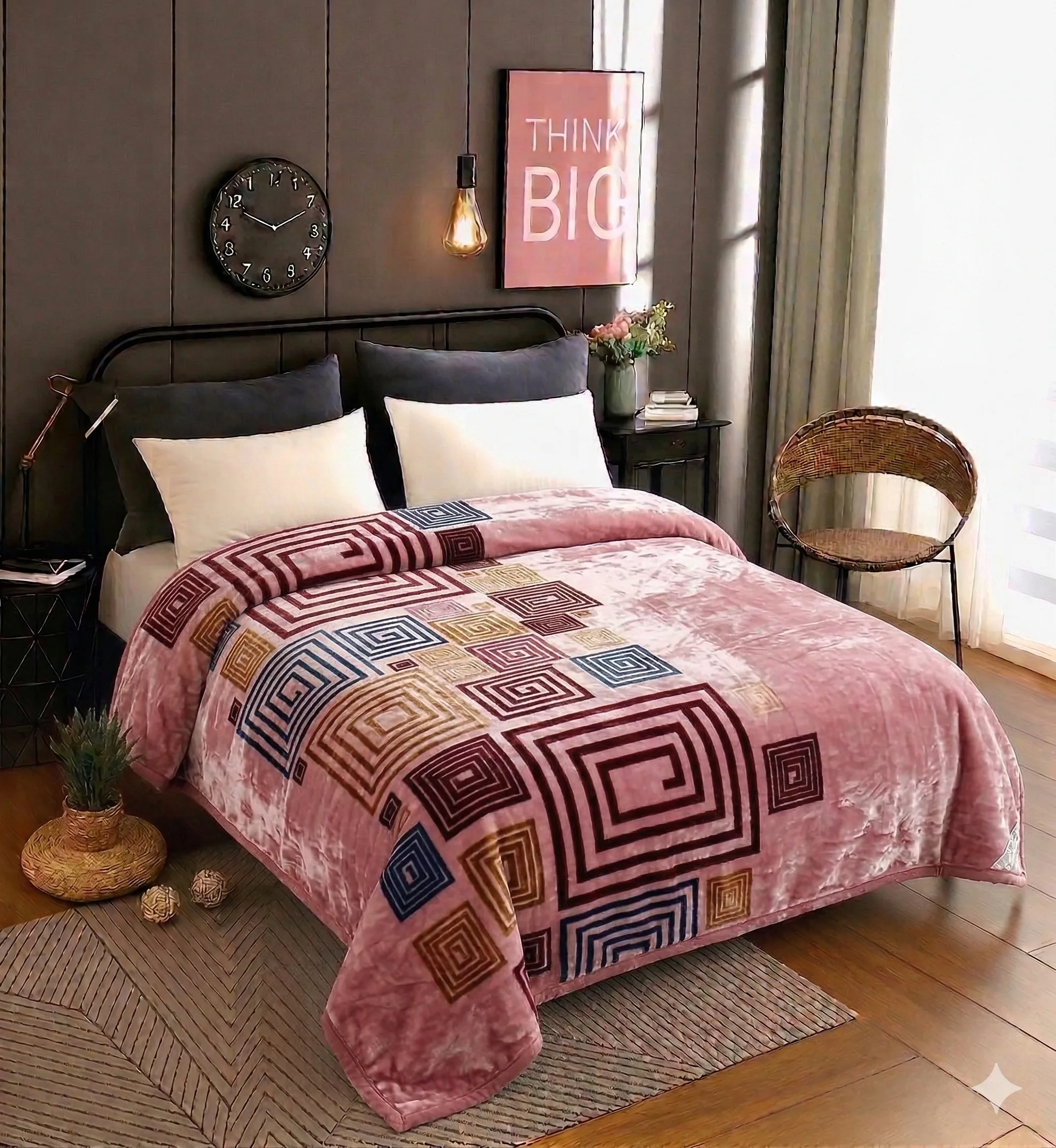
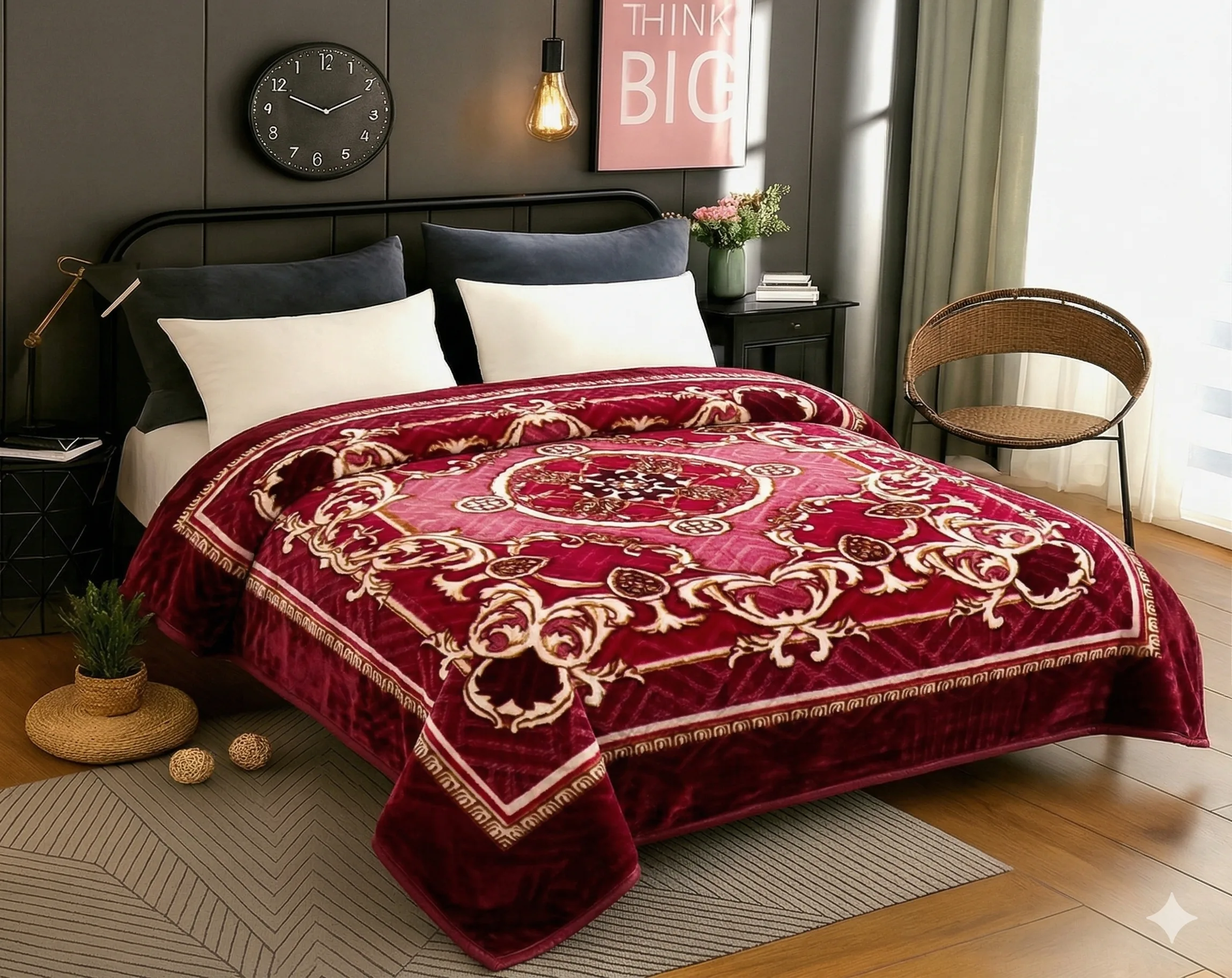
Different collections carry different MOQs because their cost structure differs. A plain embossed blanket in a solid colour requires only the embossing pattern setup and a single dye batch — the fixed setup cost is comparatively low, and MOQ can sit lower per design. A printed mink blanket involves design plate creation, multi-colour print setup, and a heavier base fabric with more complex finishing. The fixed cost of starting that run is significantly higher, and the MOQ rises accordingly.
As a rough indication, plain embossed designs typically carry the lowest MOQs in the range, cloudy blankets sit in the middle, and printed mink designs at the higher end. Buyers who plan their assortment with this in mind can build a programme that meets per-design minimums without forcing themselves into over-ordering on premium designs.
Want to know the exact MOQ for your requirement?
MOQ figures vary by collection, design complexity, and order structure. Contact our sales team for a specific figure tailored to your buyer profile and target assortment.
Get MOQ Details — Contact UsMixed-MOQ Across Collections
One of the most useful tools for smaller wholesale buyers is the ability to combine designs from across the catalogue to hit a total volume rather than meeting the per-design floor on every single SKU. Many manufacturers, including ours, will work to a structure where the total order needs to satisfy a combined minimum across collections, with a smaller per-design minimum within that total.
This approach allows a regional distributor to take, for instance, three embossed designs at moderate quantity and two mink designs at the per-design minimum, building a balanced assortment without committing to a full pallet of any single design. Buyers should ask explicitly whether this kind of mixed-MOQ structure is available — it often is, but it is rarely advertised on a brochure.
How to Approach MOQ Negotiation
MOQ is negotiable, but only on certain dimensions. Manufacturers will rarely flex on the absolute floor for a single design, because that floor is set by production economics. They will, however, often flex on the per-design minimum if the buyer is committing to longer lead times that allow the order to be slotted into existing production runs, or if the buyer is bundling multiple designs into one purchase order.
The most productive negotiation question is not "Can you reduce the MOQ?" but "What conditions would allow a smaller per-design quantity at this price?" That reframes the conversation around tradeoffs the manufacturer can actually offer — extended lead time, advance payment, locking the order into a specific colour palette already on the production schedule — rather than a flat discount on the minimum.
Sample Sets vs Bulk MOQ
Sample sets are a separate conversation. Most serious manufacturers will provide a small set of physical samples for evaluation before a buyer commits to a bulk order. Sample charges, sample lead times, and the rules around offset against future orders should be confirmed up front. A sample programme is not a substitute for a bulk MOQ, and buyers who try to use sample requests as a way to get small quantities for resale are quickly identified and deprioritised. Treating samples as samples — and committing to bulk volumes when ready — is the path that builds long-term supplier relationships.
Closing
MOQ is a function of how blanket manufacturing actually works, not a barrier put up to inconvenience buyers. Wholesale buyers who understand the economics behind it negotiate more effectively, build better assortments, and avoid the pricing surprises that come from pushing a manufacturer below a workable production scale. For specific MOQ guidance against your category and quantity expectations, the fastest route is a direct conversation with our sales team.