Private Label Blanket Manufacturing in India: An Operational Guide
Published 8 May 2026
This guide is for the procurement, sourcing, and operations reader who has already decided that private label is the right direction and now needs to run the programme. It covers the operational mechanics — artwork file specifications, MOQ tiers, lead-time stages, the sample-approval flow, packaging configurations, and a vendor-evaluation rubric — so the first purchase order ships on time, on spec, and without surprises. If you're earlier in the journey — deciding whether to private-label, what positioning to take, or how to model the unit economics — start with our strategic guide for brand owners.
Artwork and File Specifications
Most first-run delays trace back to artwork files that are not production-ready. Established manufacturers can produce documentation for the file requirements they need, but the buyer is responsible for delivering files that meet the spec.
- Vector files for logos and labels. Adobe Illustrator (.ai) or PDF with all fonts converted to outlines. Raster logos at any resolution will pixelate on a woven label or printed polybag.
- Embossed pattern artwork. Tileable repeat with a defined repeat size (typically 30–60 cm square). Supplied as vector with stroke widths labelled, since embossed rollers cannot reproduce hairline detail below approximately 0.6 mm.
- Printed designs. 300 dpi at 1:1 scale, CMYK colour space, with bleed of 5 mm on each side. Pantone references called out for any spot colour.
- Woven jacquard cards. Two-tone or three-tone vector, with a stated thread-count target. Fine detail below approximately 1 mm will not render in jacquard.
- Barcodes. Supplied as separate vector files with the GTIN encoded; manufacturer should not be reverse-engineering codes from a low-resolution image.
- Care label content. Wash symbols, fibre composition, country of origin, and importer details supplied in a separate text file. For Indian retail, fibre content must comply with the Legal Metrology Act labelling rules.
Files are reviewed at receipt; any clarifications come back within two working days. Locking the file pack before sampling begins is the single highest-leverage discipline in the operational flow.
MOQ Tiers Explained
Minimum order quantities scale with the depth of customisation. The tiers below reflect what is typical at established Panipat manufacturers; for a deeper explanation of how MOQs are calculated and negotiated, see our MOQ explainer.
- Tier 1 — 100–250 pieces per design. Buyer's woven label on an existing catalogue design, with a branded polybag. The lowest commitment available because no new tooling is involved.
- Tier 2 — 300–500 pieces per design. Custom artwork, custom polybag print, and brand-specific colourways drawn from the existing fibre and dye library. Plate and screen setups are amortised across this run.
- Tier 3 — 1,000+ pieces per design. Bespoke yarn, custom GSM, or new tooling — for example, a unique embossed roller or a new jacquard card. Tooling cost is recovered across the first run; subsequent runs benefit from a lower per-piece cost.
- Tier 4 — 2,000–5,000 pieces per design. Export programmes shipping a full 20-foot or 40-foot container. Freight economics, sea-freight transit time, and consolidated documentation only make sense at this volume.
Quotations should specify which tier is being priced. A 50-piece MOQ quote on full custom work signals either a workshop subsidising the run for first-customer reasons or one cutting corners that will surface during inspection.
GSM Specifications and Quality Tiers
GSM — grams per square metre — is the operational shorthand for weight and hand-feel. The specification belongs in the PO, not the marketing brief.
- 180–250 GSM: entry-level mink and embossed. Value-tier programmes, summer-weight covers.
- 280–350 GSM: the high-volume mid-tier. Most regional retail and e-commerce SKUs sit here.
- 400–500 GSM: premium retail and gifting. Heavier hand-feel, more visible pile.
- 550–700 GSM: super-soft and double-layer constructions for luxury retail and 5-star hospitality.
Spec a tolerance — for example, 400 GSM ±5% — and verify it at final inspection with a physical weighing of randomly selected pieces. A written GSM target with a tolerance is enforceable; a marketing description ("luxuriously heavy") is not.
Lead-Time Stages
A realistic private-label timeline runs in three operational phases. Building the buyer's calendar around these stages prevents the rolling slippage that plagues first programmes.
- Sample stage (10–18 days): artwork sign-off, label development, fibre and colour selection, first sample dispatched. Two iterations are common; a third indicates a brief that needs sharpening before any more loom time is committed.
- Bulk production (25–45 days): approved sample to finished, packed pieces. Faster on repeat designs, slower on first runs that involve new tooling or new colour batches.
- Pre-shipment inspection and dispatch (5–10 days): AQL-based inspection, packing list generation, e-way bill or export documentation, container loading.
Total realistic lead time for a first private-label programme: 8–10 weeks. Seasonal launches — Diwali, year-end, winter retail — must be reverse-engineered from the on-shelf date with sampling booked at least 12 weeks ahead. To start a sample request or confirm current lead times, use the contact page.
The Sample-Approval Flow
Sample approval is the only inexpensive moment to find problems. A disciplined flow has four checkpoints, each with a written sign-off before the next is started.
- Artwork proof. Digital proof of label, hangtag, polybag print, and any printed design. Buyer signs off in writing on file content, dimensions, and Pantone references. No fabric is loaded until this is closed.
- Strike-off or dye lab dip. A small swatch of dyed fabric in the target colour, evaluated under D65 daylight. Pantone match within Delta-E tolerance is confirmed before bulk dyeing starts.
- Pre-production sample (PPS). A complete blanket in target GSM, with mock label, hangtag, and packaging. Buyer evaluates hand-feel, drape, GSM by weighing, label placement, and stitch quality. Revisions at this stage are inexpensive; revisions after bulk loading are not.
- Top-of-production (TOP) sample. A piece pulled from the actual bulk run, dispatched while production continues. Confirms that bulk matches the approved PPS and gives the buyer a final intervention point if drift is detected.
Each sign-off should be a dated email or signed proof, not a verbal approval. The audit trail matters when a quality dispute arises during pre-shipment inspection.
Packaging Mechanics
Packaging carries cost, lead time, and a separate set of file requirements. The configurations below cover most retail and e-commerce specifications.
- Inner polybag. Plain LDPE, printed LDPE with brand artwork, or upgraded non-woven carry bag. Printed polybags carry their own MOQ at the bag printer (typically 5,000+ bags) which must be planned alongside blanket MOQ.
- Hangtag and insert card. Card stock weight (250–350 gsm typical), finish (matte, gloss, soft-touch), printing method (offset, foil-stamping, embossing), attachment (string loop, plastic loop). Specify cut size and bleed.
- Display sleeve or rigid box. For premium retail and gifting. Two-piece rigid boxes carry the longest tooling lead time (typically 3–4 weeks for a custom die) and should be triggered in parallel with sampling, not after sample approval.
- Master carton. Five-ply or seven-ply corrugated, with shipping marks (PO number, SKU, quantity, gross/net weight, country of origin). Carton size is calculated from blanket folded dimensions and carrier-friendly weight limits — typically 12–15 kg per carton for hand handling.
Packaging files belong in the same artwork pack as the product files, locked at the same time. Late packaging changes are the most common cause of dispatch delays.
Vendor Evaluation Rubric
Five operational checks separate competent manufacturing partners from costly mistakes. Score each on a 1–5 scale and weight by the importance to the buyer's programme.
Capacity. Ask for monthly production volume in the relevant category. If the buyer's order represents more than 30% of monthly capacity, the schedule will be tight and will not absorb a second iteration without slipping.
Sample policy. A serious manufacturer treats samples as a paid, accountable process. A modest sample fee — refunded against the bulk order — is the healthy norm. Unlimited free samples signal either a sales team chasing the order at any cost or a workshop with no opportunity cost on production time.
Certifications and compliance. For export programmes, established manufacturers can produce documentation for OEKO-TEX, ISO 9001, and SEDEX or BSCI audits. For domestic India retail, BIS marking where applicable and accurate fibre-content labelling under the Legal Metrology Act are non-negotiable.
Reference customers. Ask for two reference buyers in the same scale band. A manufacturer who has only served much smaller or much larger accounts may not have systems calibrated to the buyer's order size.
Communication discipline. Pre-order responsiveness predicts post-order responsiveness. Track how quickly the first three enquiries are answered, how complete the answers are, and whether a single point of contact is named on the quotation.
Where Sarv India Fits Operationally
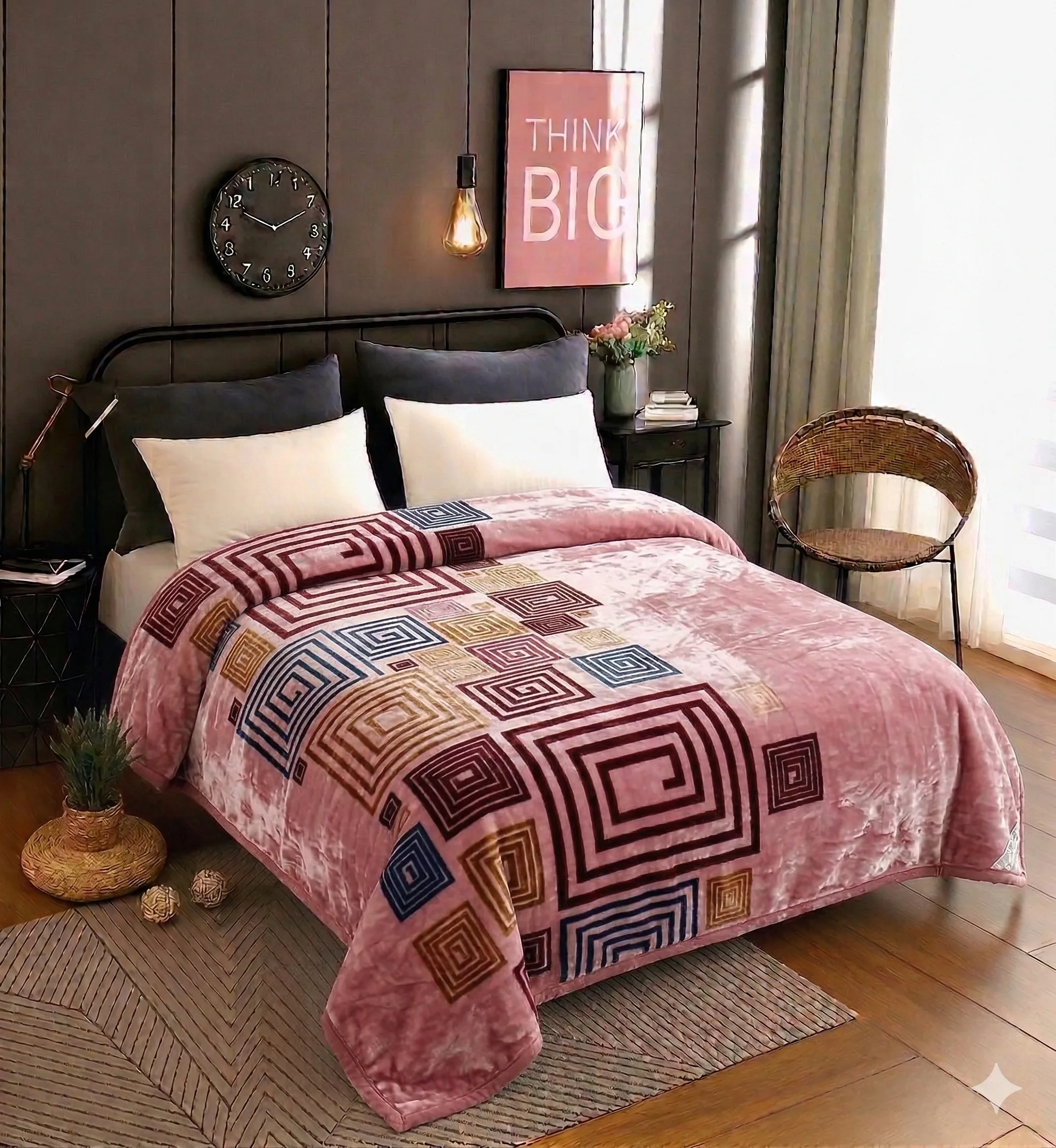
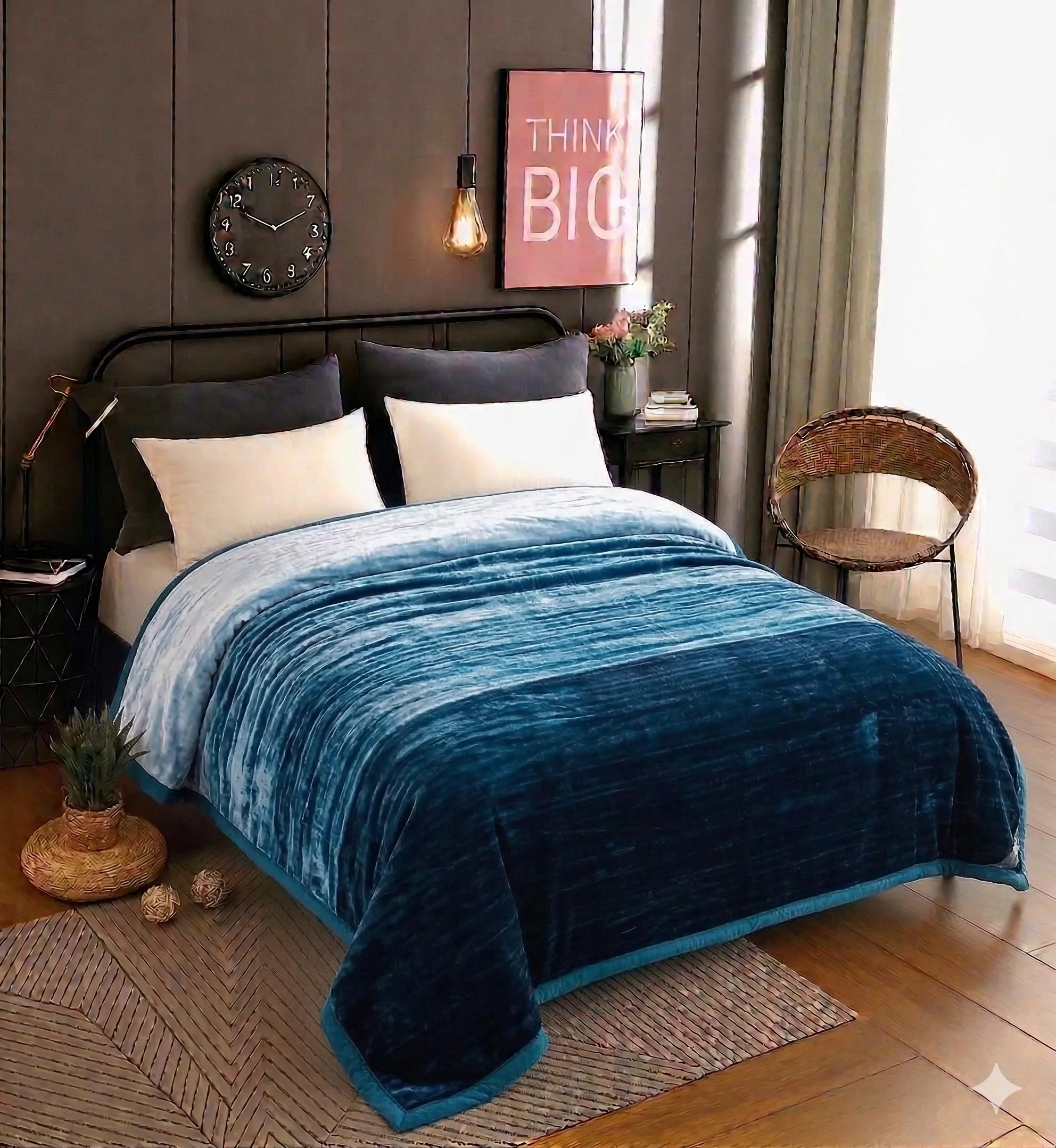
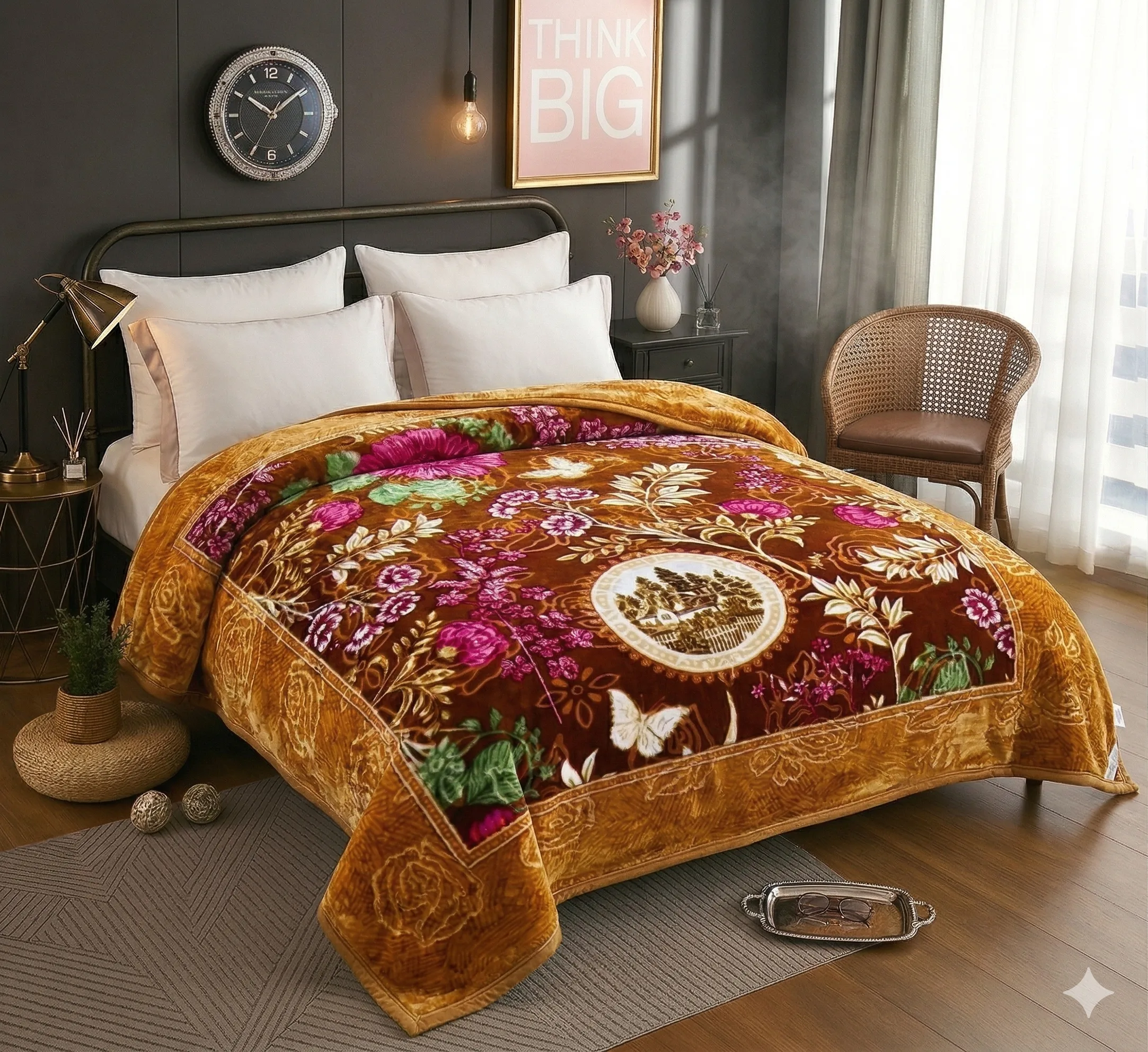
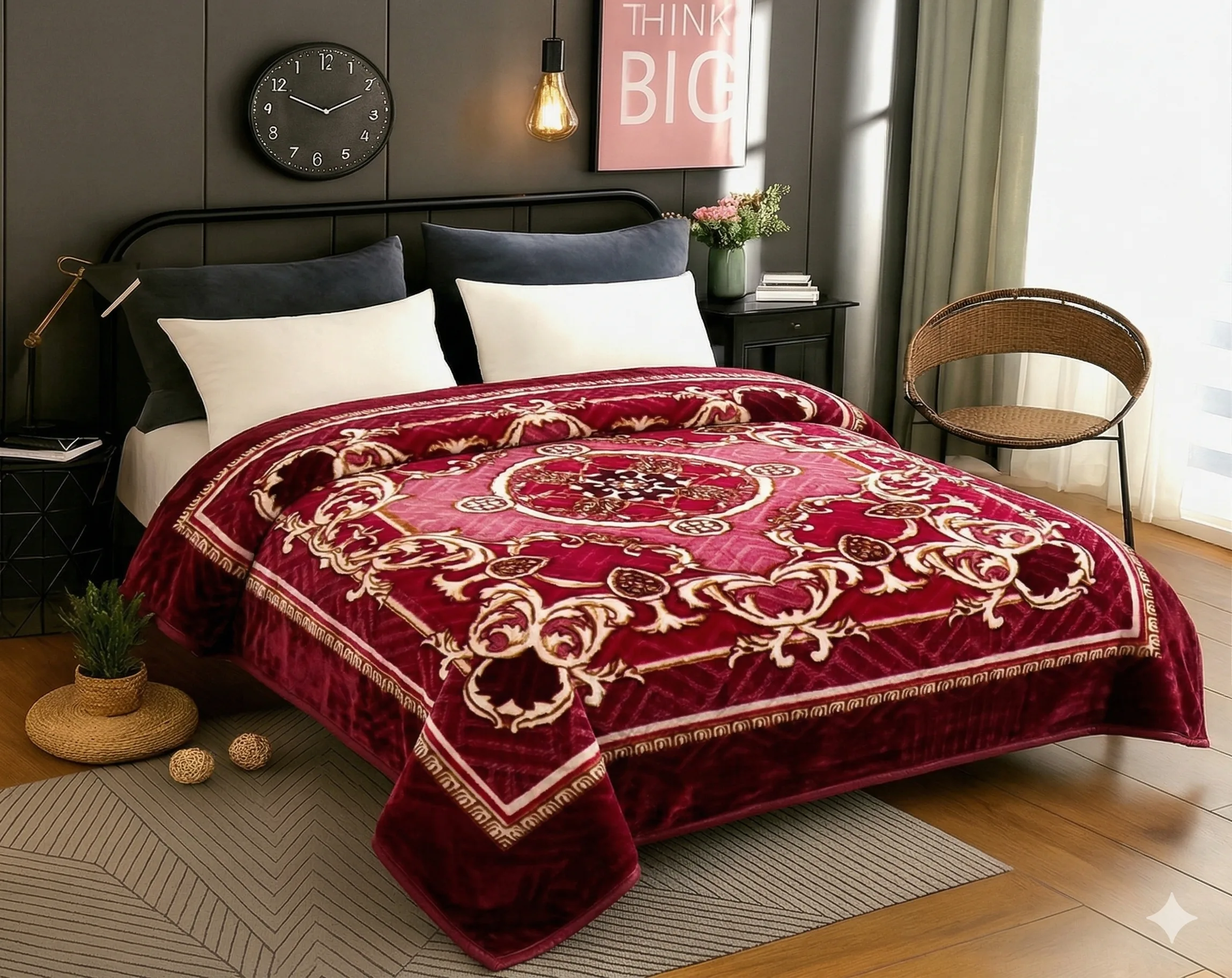
Sarv India Home Furnishing operates a structured private-label desk with the operational disciplines described above. The established Panipat manufacturing base supports runs from 250 pieces upward, with a defined sample-to-bulk workflow and per-piece pricing that breaks out artwork, label, packaging, and freight as separate line items. The catalogue spans embossed, mink, and high-pile constructions across the GSM bands above — buyers can review the Plain Embozz Colors range or the heavier Super Soft Mink range as starting points for their programme.
The operational discipline above is what separates a private-label run that ships on time from one that consumes working capital and goodwill. Lock the file pack, respect the sample checkpoints, specify GSM with a tolerance, and the first PO will ship without surprises.