Plain Embossed Blankets vs Mink Blankets: A Wholesale Buyer's Guide
Published 7 May 2026 · Updated 8 May 2026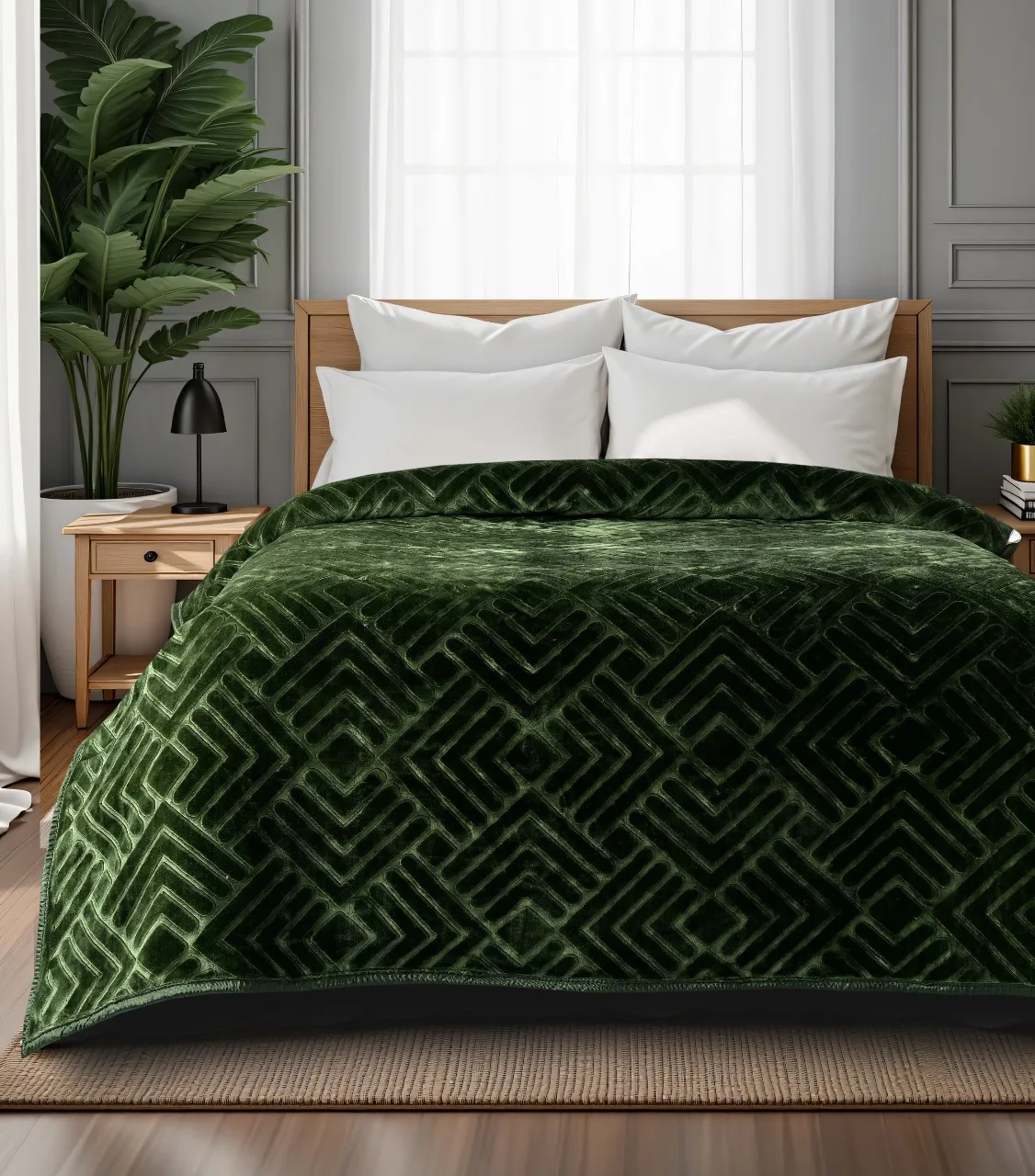
Plain embossed and mink blankets are often discussed in the same breath, but they are distinct categories that address different buyers, different price tiers, and different sell-through patterns. Treating them as interchangeable is a common merchandising mistake — one that costs distributors and retailers margin every season. The aim of this guide is to lay out the construction differences clearly, identify the buyer each category is built for, and offer a stocking framework that uses both effectively.
What Plain Embossed Blankets Are
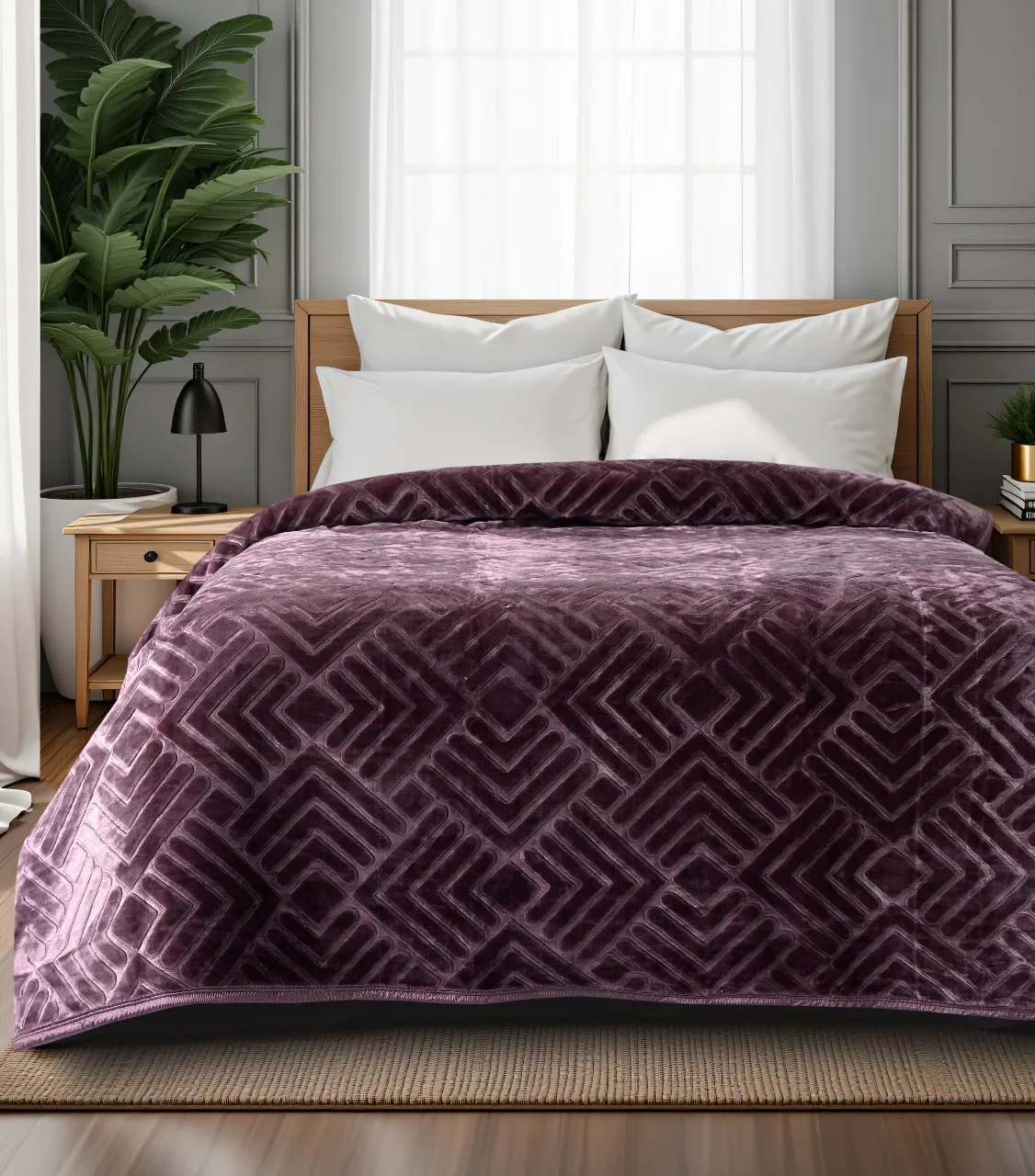
A plain embossed blanket is a single-colour blanket finished with a tactile embossed pattern pressed into the surface. The construction is typically lighter than a mink blanket, with a smooth handle and a finish that emphasises the texture of the embossing rather than printed designs. Common weight ranges sit between 1.6 and 2.2 kilograms for a standard double-bed size, depending on GSM specification.
The design palette is intentionally restrained — solid colours, often in a coordinated range that supports gifting and corporate use cases. The embossing pattern is the visual element, and good embossing depth is the single biggest differentiator in this category. The price point is positioned for value retail, and the typical buyer is shopping on the basis of price, presentation, and gift-worthiness rather than premium feel.
What Mink Blankets Are
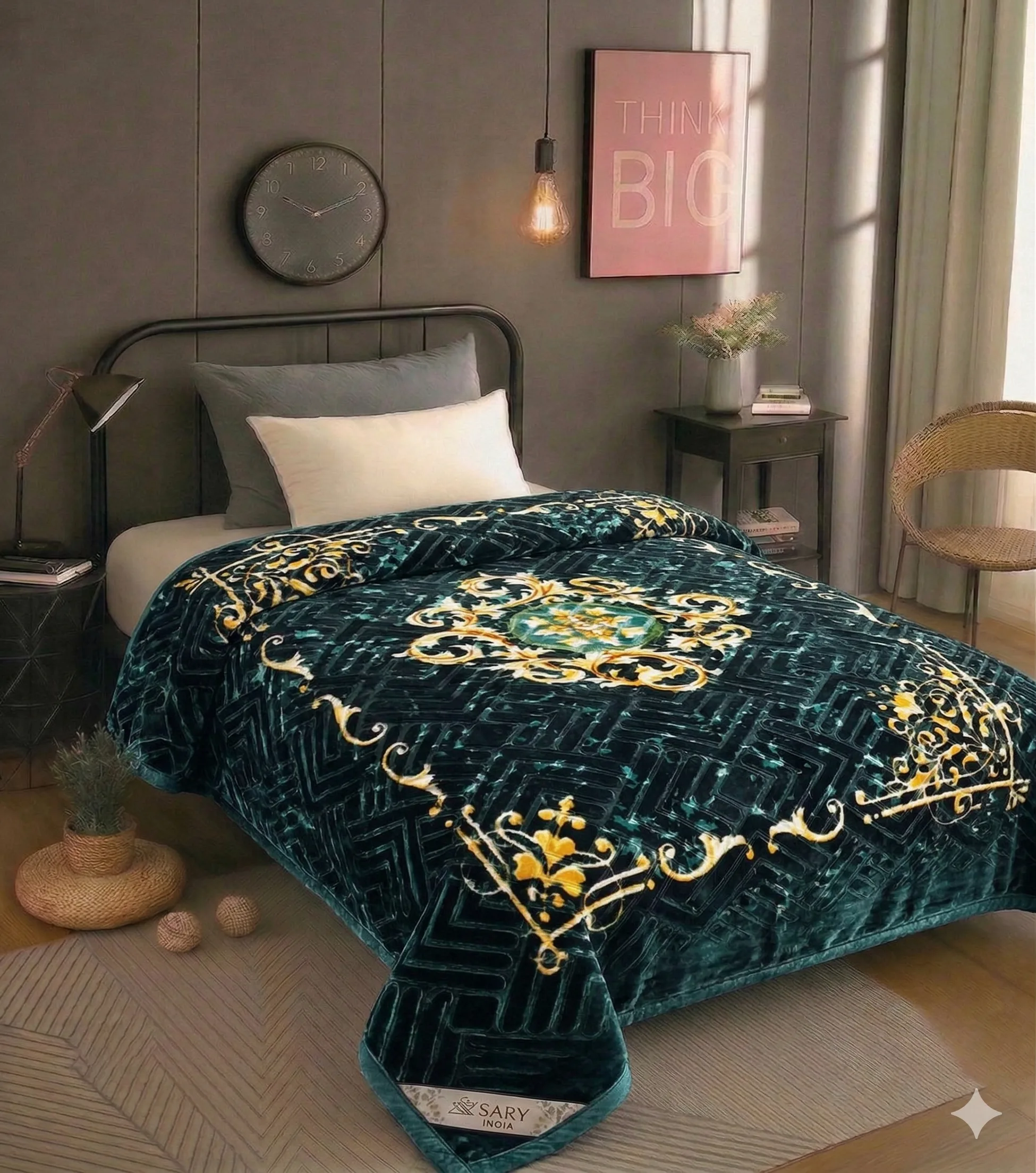
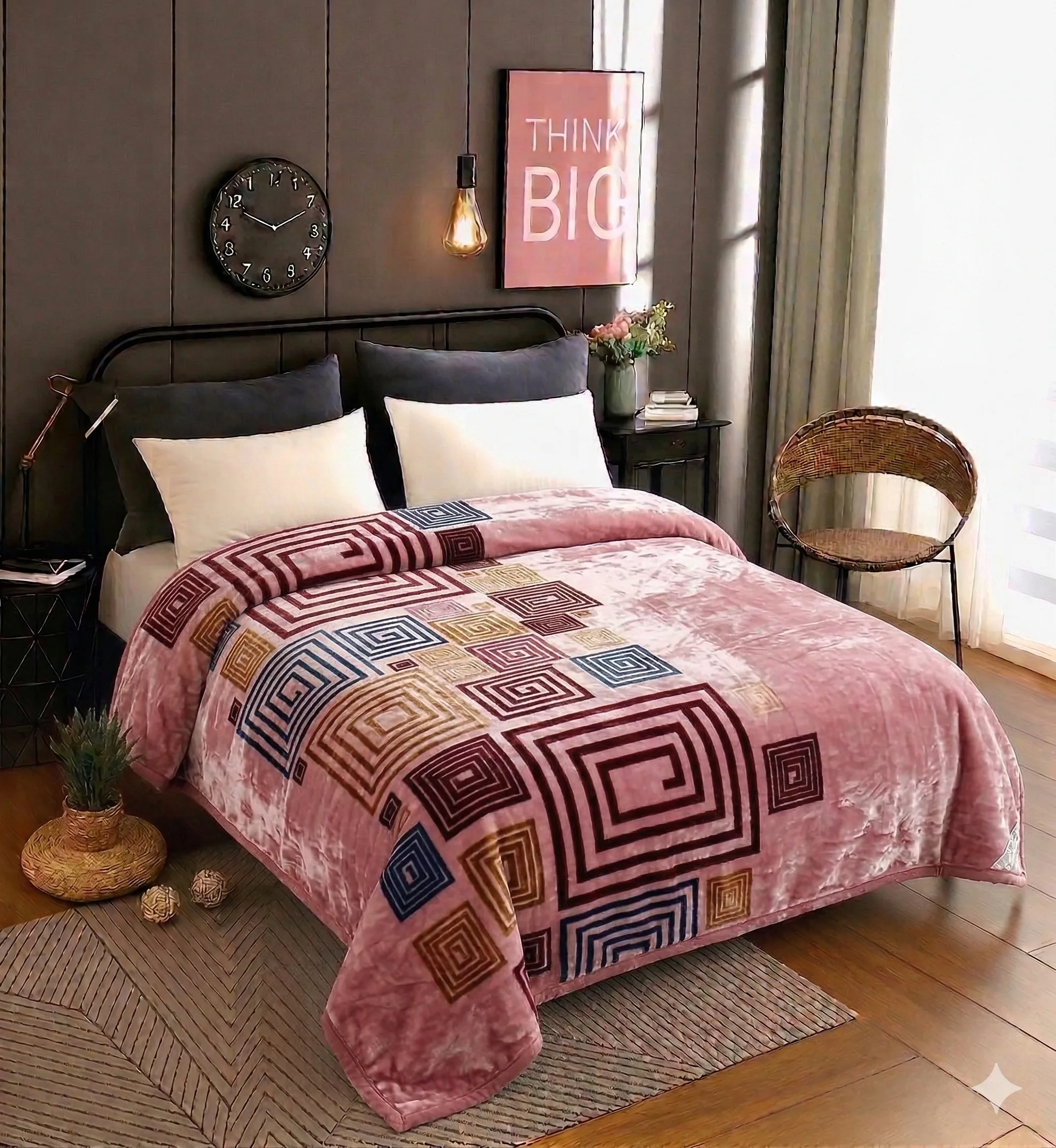
A mink blanket is a piled blanket — the surface fibres are raised to create a soft, plush hand-feel that resembles natural fur. Construction involves a base fabric onto which the pile is woven and then sheared, brushed, and finished to achieve the characteristic softness. Standard double-bed mink blankets typically weigh between 2.4 and 4.5 kilograms, depending on GSM and pile density.
The design library for mink is far broader. Prints range from traditional florals and damask patterns through to abstract and contemporary designs, with deep saturated colours that the pile carries well. The hand-feel is the dominant value driver, and pile density, evenness, and finish are the primary quality cues a buyer evaluates at the shelf.
Construction Comparison
Side by side, the two categories differ on the following parameters:
- Surface construction: Embossed = pressed pattern on a flat surface. Mink = woven pile, sheared and brushed.
- Weight range (double): Embossed ~1.6–2.2 kg. Mink ~2.4–4.5 kg.
- Hand-feel: Embossed is smooth with textured relief. Mink is plush and dense.
- Design range: Embossed is solid-colour led. Mink supports a full library of prints and designs.
- GSM range (typical): Embossed 200–350 GSM. Mink 400–700+ GSM.
- Finish quality cues: Embossed — embossing depth, edge stitching, colour evenness. Mink — pile density, evenness, colour saturation, weight.
- Perceived value: Embossed reads as practical and giftable. Mink reads as premium and indulgent.
Target Buyer Segments
Plain embossed blankets perform best in value retail, modern trade entry-tier, gifting circuits, and corporate gifting programmes. The buyer is typically price-led, often purchasing in coordinated colour packs, and the product needs to look presentable in retail packaging more than it needs to feel luxurious in the hand.
Mink blankets address premium retail, hospitality buyers (hotels, resorts, serviced apartments), and the upper tiers of online retail where unboxing experience and product feel matter. The buyer is willing to pay more, expects a richer design library, and judges the product first by hand-feel and visual depth.
Stocking Recommendations
For most distributors and full-line retailers, both categories deserve shelf space. Carrying only one limits the price-band coverage and forces the buyer to send customers elsewhere for the other category. A practical default ratio looks like this:
- Value-led distributor or retail chain: 60% embossed, 40% mink — anchored by embossed entry pieces with mink as the trade-up.
- Mid-market retail: 40% embossed, 60% mink — mink drives the headline assortment, embossed serves the gifting and budget-conscious shopper.
- Premium retail or hospitality supply: 20% embossed, 80% mink — mink is core, embossed is a coordinated supplementary range.
Within the mink portion, distribute units across at least three to five distinct designs to avoid concentration risk if one design under-performs. For embossed, depth across a tight colour palette (six to eight colours) typically outperforms breadth across many shades.
Margin Considerations
Embossed blankets generally carry a thinner per-unit margin in absolute terms but turn faster, particularly in the gifting season. Volume velocity is the friend of this category. Mink blankets carry higher per-unit margin but turn at a slower velocity outside peak winter weeks; the working capital tied up per piece is higher, and the ageing of unsold stock is a real consideration. Buyers who model both categories together — rather than treating them as separate decisions — typically achieve a better blended return on inventory.
Closing
Both categories belong in a serious wholesale assortment. Sarv India Home Furnishing produces both at scale: the Plain Embozz Colors collection covers the full embossed value-tier requirement, while the Super Soft Mink Blanket collection addresses the premium pile category with a deep design library. The two are designed to be merchandised together rather than against each other.